
BMI calculator
Body Mass Index (BMI) is the ratio of your weight to your height. It is used to check whether an adult's weight suits their height (ages 20 and over).
Enter your weight and height
For adults aged 20 and over
Your result will appear here
Enter your weight and height, then press Calculate.
Results are estimates to help you look after your health, not a medical diagnosis. If you are pregnant, have a health condition or are worried about your weight, talk to a doctor or dietitian.
What you enter is used only for the calculation in this browser. Nothing is saved or sent anywhere.
Understanding your BMI result
Why your BMI matters
BMI helps show your risk of weight-related disease. People above the healthy range have a higher risk of high blood pressure, diabetes, coronary heart disease and gallstones. People who are too thin have a higher risk of infection and their bodies may not work at their best. It's worth keeping your weight in the healthy range.
BMI categories for Asian adults
Asian people face a higher risk of diabetes and heart disease at a lower BMI than people of European descent, so the WHO Western Pacific Region recommends the cut-offs below for Asian populations.
| BMI | Category |
|---|---|
| Below 18.5 | Underweight |
| 18.5–22.9 | Healthy range |
| 23.0–24.9 | Overweight (at risk) |
| 25.0–29.9 | Obese class I |
| 30.0 or higher | Obese class II |
What each category means
- Underweight (BMI Below 18.5)
- Your weight may be low for your height. Check that you are getting enough energy and protein. If you are losing weight without trying, see a doctor.
- Healthy range (BMI 18.5–22.9)
- Your weight suits your height. Keep it up with a varied diet and regular movement.
- Overweight (at risk) (BMI 23.0–24.9)
- For Asian adults, the risk of type 2 diabetes and high blood pressure starts to rise in this range. Small changes to eating and activity can help.
- Obese class I (BMI 25.0–29.9)
- The risk of diabetes, high blood pressure and high cholesterol is raised. A doctor or dietitian can help you make a plan that suits you.
- Obese class II (BMI 30.0 or higher)
- The risk of weight-related disease is high. We recommend seeing a doctor for a health check and a safe weight plan.
How it's calculated
How BMI is calculated
BMI = weight (kg) ÷ height (m)²
Example: 55 kg and 160 cm (1.60 m) → 55 ÷ (1.60 × 1.60) = 21.5
If you enter pounds or feet and inches, the calculator converts them to kilograms and centimetres first (1 lb = 0.45359237 kg, 1 in = 2.54 cm), so both unit systems give the same result.
Limits of BMI
- BMI doesn't measure body fat directly. Very muscular people, such as athletes, can have a high BMI without much fat.
- It isn't used during pregnancy, or for children and teenagers under 20, who are assessed with growth charts instead.
- Check your waist too: as a general guide, your waist should be less than half your height.
Sources
WHO Western Pacific Region, IASO and IOTF (2000). The Asia-Pacific perspective: redefining obesity and its treatment.
WHO Expert Consultation (2004). Appropriate body-mass index for Asian populations and its implications for policy and intervention strategies. The Lancet, 363, 157–163.
Related tools
- In Thai
BMR calculator (In Thai)
Estimate the energy your body uses each day from your sex, age, weight, height and activity.
- In Thai
Weight planner (In Thai)
Set a target weight and see your daily calories and an estimated timeline.
- In Thai
Food calorie table (In Thai)
Look up the energy in more than 800 foods, desserts, fruits and drinks.
Related products
Affiliate link: Product links are Shopee affiliate links. If you buy through them, Fatnever earns a small commission at no extra cost to you. Read our disclosure

BG Kettlebell ดัมเบลยกน้ำหนัก 2/4/6/8/10/12 KG. เคตเทิลเบล PVC แบบนุ่ม เคตเทิลเบลล์ ลูกตุ้ม รุ่น Q312 (opens in a new tab)
See the current price and offers on Shopee
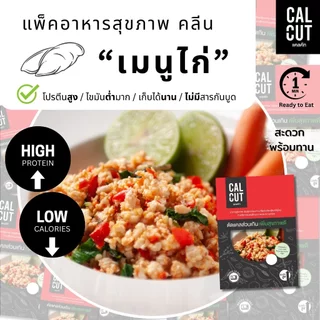
Calcut อกไก่ผัดไม่น้ำมัน อาหารคลีน อร่อย พร้อมทาน สุขภาพ เปลี่ยน นน. โปรตีนสูง อกไก่ เชฟเต้ย โปรตีน ลีน เฮลตี้ cleanfood (opens in a new tab)
See the current price and offers on Shopee
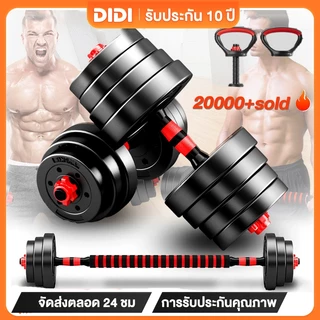
ดัมเบล 10-40KG กิโล ชุดดัมเบลพร้อมบาร์เบล ออกกำลังกาย Adjustable Dumbbell and Barbell Set 20 kg ดัมเบลปรับน้ำหนัก (opens in a new tab)
See the current price and offers on Shopee

Calcut อกไก่นุ่ม อร่อย พรีเมี่ยม อาหารสุขภาพ คลีน อาหารคลีน เปลี่ยน นน. อาหาร อกไก่ เชฟเต้ย โปรตีน protien ลีน cleanfood (opens in a new tab)
See the current price and offers on Shopee
Product names are shown in Thai, as the sellers list them on Shopee Thailand.
Frequently asked questions
What is a normal BMI?
For Asian adults, a BMI of 18.5–22.9 is in the healthy range. 23.0–24.9 is overweight with increased risk, and 25.0 or higher is obesity, according to the WHO Western Pacific Region cut-offs.
Why are the BMI cut-offs lower for Asian adults?
Research shows that at the same BMI, Asian people tend to have a higher proportion of body fat, and their risk of type 2 diabetes and heart disease starts at a lower BMI than in people of European descent. Lower cut-offs reflect that.
Can children or pregnant women use this calculator?
No. The categories on this page are for adults aged 20 and over. Children and teenagers are assessed with growth charts for their sex and age, and pregnant women should ask their doctor about a healthy weight.
Does BMI work for very muscular people?
It can, but read the result with care. BMI uses total weight, so it can't tell muscle from fat. Muscular people can have a high BMI without much body fat, so measure your waist too.
Does this calculator store my data?
No. The weight and height you enter are used only for the calculation in your browser. Nothing is saved or sent anywhere.
Further reading
- Weight & bodyIn Thai
What BMR is and how it's calculated (In Thai)
What BMR means, the formulas for men and women, and the activity multipliers.
- Weight & bodyIn Thai
Planning weight loss or gain with calories (In Thai)
How a weight plan works, and how daily calories and the timeline are calculated.
- Food & nutritionIn Thai
How much water to drink each day (In Thai)
The basic formula, and how much to add for activity and weather.