
Ideal Weight Calculator
Find the healthy weight range for your height, using the Asian or the international BMI standard. The result is a range, not a single number.
Your height
For adults aged 20 and over
Your result will appear here
Enter your height to see the healthy weight range
Results are estimates to help you look after your health, not a medical diagnosis. If you are pregnant, have a health condition or are worried about your weight, talk to a doctor or dietitian.
What you enter is used only for the calculation in this browser. Nothing is saved or sent anywhere.
How to read the result
Why the result is a range
Any weight in this range gives a BMI in the healthy category. There's no evidence that one particular weight in the range is best for everyone, because people differ in build, muscle and health.
Asian and international standards
At the same BMI, Asian people tend to have more body fat and start to face a higher risk of diabetes and heart disease at a lower BMI. The WHO Western Pacific Region therefore uses an upper limit of 22.9 instead of 24.9. Fatnever uses the Asian standard by default.
| Standard | Healthy BMI |
|---|---|
| Asian standard | 18.5–22.9 |
| WHO international standard | 18.5–24.9 |
BMI is a screening measure
BMI gives a first look at risk; it isn't a diagnosis. Check your waist too: as a general guide, your waist should be less than half your height. If your weight is outside this range or you have a medical condition, talk to a doctor before setting a goal.
How it's calculated and where the standards come from
Formula
- Lowest weight in the range = lower BMI limit × height (m)²
- Highest weight in the range = upper BMI limit × height (m)²
Example: 160 cm (1.60 m), Asian standard → 18.5 × 1.60² = 47.4 kg to 22.9 × 1.60² = 58.6 kg.
- The range is rounded inwards (lower end up, upper end down), so both numbers shown are truly in the healthy range.
- Feet and inches are converted to centimetres first (1 in = 2.54 cm), and the result is shown in pounds.
- With the Asian standard, the range matches the healthy weight shown by the BMI calculator.
Limitations
- For adults aged 20 and over; not for pregnant women, children or teenagers.
- BMI can't tell muscle from fat. Very muscular people may weigh more than this range and be healthy.
- Healthy weight may differ for older adults; talk to a doctor.
Sources
WHO Western Pacific Region, IASO and IOTF (2000). The Asia-Pacific perspective: redefining obesity and its treatment.
World Health Organization (2000). Obesity: preventing and managing the global epidemic. Report of a WHO Consultation. WHO Technical Report Series 894.
WHO Expert Consultation (2004). Appropriate body-mass index for Asian populations and its implications for policy and intervention strategies. The Lancet, 363, 157–163.
Related tools
BMI calculator
Check whether your weight suits your height, and see the healthy weight range for your height.
Calorie Deficit Calculator
Estimate your BMR, TDEE and a safe daily calorie target for weight loss
- In Thai
Weight planner (In Thai)
Set a target weight and see your daily calories and an estimated timeline.
Related products
Affiliate link: Product links are Shopee affiliate links. If you buy through them, Fatnever earns a small commission at no extra cost to you. Read our disclosure
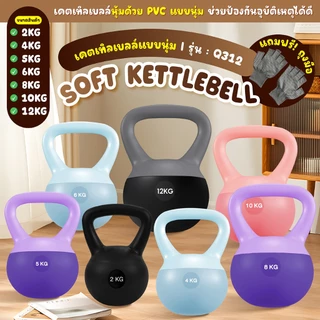
BG Kettlebell ดัมเบลยกน้ำหนัก 2/4/6/8/10/12 KG. เคตเทิลเบล PVC แบบนุ่ม เคตเทิลเบลล์ ลูกตุ้ม รุ่น Q312 (opens in a new tab)
See the current price and offers on Shopee
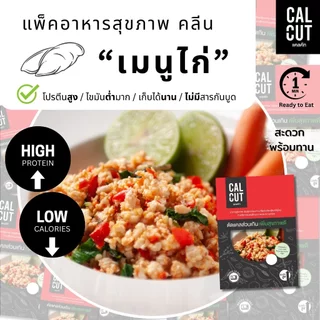
Calcut อกไก่ผัดไม่น้ำมัน อาหารคลีน อร่อย พร้อมทาน สุขภาพ เปลี่ยน นน. โปรตีนสูง อกไก่ เชฟเต้ย โปรตีน ลีน เฮลตี้ cleanfood (opens in a new tab)
See the current price and offers on Shopee
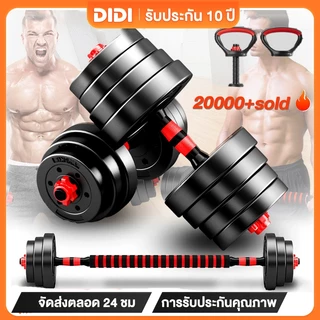
ดัมเบล 10-40KG กิโล ชุดดัมเบลพร้อมบาร์เบล ออกกำลังกาย Adjustable Dumbbell and Barbell Set 20 kg ดัมเบลปรับน้ำหนัก (opens in a new tab)
See the current price and offers on Shopee
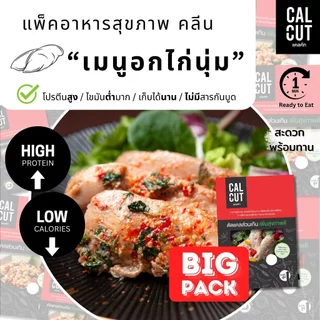
Calcut อกไก่นุ่ม อร่อย พรีเมี่ยม อาหารสุขภาพ คลีน อาหารคลีน เปลี่ยน นน. อาหาร อกไก่ เชฟเต้ย โปรตีน protien ลีน cleanfood (opens in a new tab)
See the current price and offers on Shopee
Product names are shown in Thai, as the sellers list them on Shopee Thailand.
Frequently asked questions
What is a healthy weight for my height?
It depends on your height. At 160 cm, for example, the healthy range under the Asian standard is about 47.4–58.6 kg. Enter your height in the calculator to see your range.
Why not give a single ideal weight?
Because there isn't one weight that suits everyone of the same height. People of the same height differ in frame and muscle, so a range is more accurate.
Which standard should I use?
For Asian people, including Thais, the Asian standard (BMI 18.5–22.9) is recommended because health risks start at a lower BMI. The international standard (18.5–24.9) is useful for comparing with data from other countries.
What if my weight is outside the range?
Start by checking your BMI and waist. If you are above the range, losing weight gradually is a good start. If you are below it, or your weight changes without a clear reason, talk to a doctor.
Further reading
- Weight & body
BMI cut-offs for Asian adults
Why Asian adults use different cut-offs, and what each BMI range means.
- Weight & bodyIn Thai
Planning weight loss or gain with calories (In Thai)
How a weight plan works, and how daily calories and the timeline are calculated.